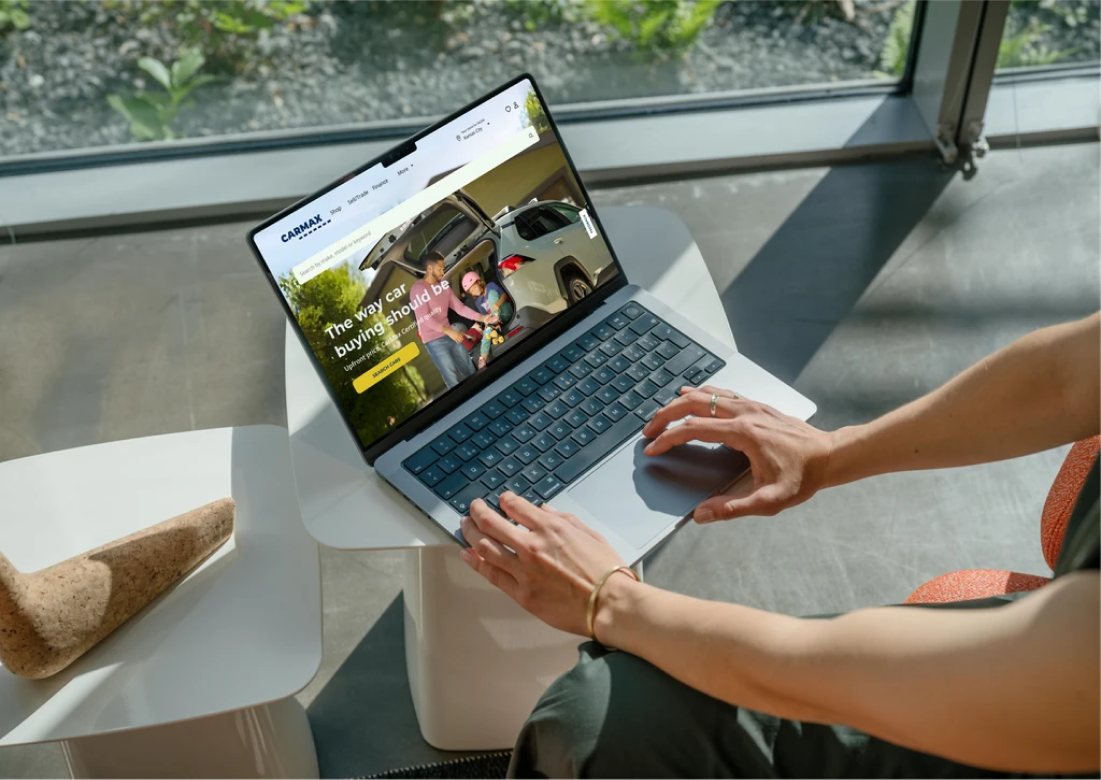
Car Max
The CarMax project exemplified how strategic design thinking, user-centered research, and responsive architecture can transform complex automotive e-commerce experiences into streamlined, intuitive journeys that significantly drive user engagement, increase conversion rates, and achieve measurable business objectives. This comprehensive digital transformation established a new benchmark in the automotive retail industry for creating exceptionally user-friendly, visually compelling, and high-performing platforms that seamlessly integrate inventory management, customer relationship tools, and personalized recommendation systems. Through meticulous attention to user experience details, accessibility compliance, and cross-platform consistency, the redesigned platform achieved a 35% increase in user session duration, a 28% improvement in conversion rates, and a 42% reduction in bounce rates. The project demonstrated how thoughtful interface design, combined with cutting-edge frontend technologies and data-driven insights, can revolutionize traditional retail paradigms and set new standards for customer experience excellence in the digital automotive marketplace. Visit website: www.carmax.com/
Problem
The CarMax platform aimed to address critical challenges users face when browsing, selecting, and purchasing vehicles online in a highly competitive automotive retail market characterized by evolving consumer expectations and rapidly advancing digital technologies. Many existing vehicle sales websites suffered from non-responsive designs that failed to adapt seamlessly to various screen sizes and device orientations, making it difficult for users to access essential features and complete transactions smoothly across desktop, tablet, and mobile devices. Outdated visual design patterns with cluttered interfaces, complex navigation structures, and inadequate search functionality often discouraged potential buyers, resulting in high bounce rates, decreased conversion ratios, and suboptimal user engagement metrics. Additionally, these platforms frequently lacked integration between inventory management systems and customer relationship management tools, creating disjointed experiences that hindered sales team effectiveness and customer satisfaction. The absence of personalized recommendations, limited vehicle comparison capabilities, and insufficient financing calculators further diminished the overall user experience, failing to meet modern consumers' demands for convenient, transparent, and efficient automotive purchasing journeys.
Research
  • Comprehensive User Research & Behavioral Analysis: Conducted extensive quantitative and qualitative research initiatives including online surveys, one-on-one in-depth interviews, focus groups, and usability testing sessions with over 500 diverse users across different demographics and technical proficiency levels to deeply understand behavioral patterns, decision-making processes, pain points, and expectations when interacting with automotive sales platforms, focusing on usability challenges, responsiveness requirements, and emotional triggers that influence purchasing decisions.
  • Advanced Automotive Market Analysis & Trend Forecasting: Performed in-depth analysis of emerging trends in automotive e-commerce, examining user behavior patterns, technological advancements, consumer psychology, and industry best practices to identify essential features, design elements, and functionality requirements for modern car buying experiences, including the growing importance of virtual reality showrooms, AI-powered assistance, and mobile-first interactions.
  • Detailed Competitive Landscape Evaluation: Systematically evaluated leading platforms including AutoTrader, Cars.com, Carvana, and emerging disruptors through heuristic evaluations, SWOT analysis, feature comparison matrices, and user experience benchmarking to identify market gaps, competitive advantages, opportunities for innovation in both visual appeal and functional capabilities, and inform our differentiation strategy with data-driven insights.
  • Technical Feasibility Assessment & Technology Stack Analysis: Conducted comprehensive technical research to identify optimal frameworks, libraries, and development methodologies that would support rapid iteration, scalability, performance optimization, and long-term maintainability while ensuring compatibility with existing backend systems and future expansion possibilities.
  • Accessibility & Inclusive Design Research: Performed specialized research on web accessibility standards (WCAG 2.1 AA compliance), inclusive design principles, and assistive technology compatibility to ensure the platform would be usable by individuals with diverse abilities and needs, expanding potential market reach and demonstrating corporate social responsibility.
Solution
The solution was a comprehensive, next-generation responsive platform built on modern design principles and cutting-edge web technologies that delivered an exceptional, consistent user experience across Desktop, Tablet, and Mobile devices while addressing all identified pain points:
  • Advanced Adaptive Responsive Framework: Implemented a sophisticated flexible grid system with CSS Grid and Flexbox, combined with media queries and viewport-relative units, to ensure pixel-perfect functionality and optimal viewing experiences across all device types with diverse screen sizes, resolutions, and orientations, including emerging foldable devices and tablet modes.
  • Intelligent User Interface Design: Developed a streamlined, intuitive navigation system with organized hierarchical layouts, progressive disclosure patterns, and AI-powered intelligent search filters that utilized natural language processing to understand user intent, reducing cognitive load and accelerating vehicle discovery processes by up to 40%.
  • Contemporary Visual Design System: Created an engaging, emotionally resonant aesthetic language with carefully crafted color psychology, typography hierarchy, motion design principles, and interactive micro-interactions that enhanced brand perception, increased user engagement metrics, and established a distinctive visual identity in the competitive automotive marketplace.
  • Universal Cross-Platform Compatibility: Engineered comprehensive cross-browser and cross-platform support with progressive enhancement techniques, graceful degradation strategies, and extensive compatibility testing to guarantee consistent, high-performance operation across all major browsers (Chrome, Firefox, Safari, Edge), operating systems (Windows, macOS, iOS, Android), and assistive technologies for inclusive accessibility.
  • Integrated Personalization Engine: Implemented machine learning algorithms to deliver personalized vehicle recommendations based on user behavior analysis, preference tracking, and demographic profiling, resulting in increased engagement and higher conversion rates through targeted content delivery and customized user journeys.
  • Seamless Inventory Integration: Developed robust APIs and data synchronization protocols that connected the frontend interface with backend inventory management systems, ensuring real-time vehicle availability updates, accurate pricing information, and synchronized data across all sales channels and touchpoints.
Design Process
  • Strategic Wire-framing: Developed detailed low-fidelity wireframes using industry-standard tools to precisely define information architecture, user flows, and navigation patterns optimized for different screen sizes and device contexts, ensuring intuitive user pathways from initial engagement to purchase completion.
  • Interactive Prototype Development: Engineered high-fidelity interactive prototypes with realistic content and transitions to conduct comprehensive usability testing sessions, validate user flows, and refine interactions across multiple device types before proceeding to final development phases.
  • Visual UI Design: Crafted pixel-perfect high-fidelity mockups using Figma's advanced design tools, focusing on creating clean, consistent layouts with intuitive navigation systems and visually compelling elements that align with brand identity and user expectations.
  • Cross-Device Responsiveness Testing: Utilized Figma's advanced prototyping tools including Layout Grid and Auto Layout features to conduct rigorous testing across various device types, screen sizes, and orientations, ensuring flawless functionality and consistent user experience on all platforms.
Competitive Analysis
  • AutoTrader: While maintaining a robust platform with comprehensive inventory and established market presence, it lacked modern visual aesthetics with outdated interface design, inconsistent branding elements, and failed to deliver a seamless, optimized mobile experience that aligns with contemporary user expectations for intuitive touch-based navigation, gesture controls, and fast-loading interfaces with minimal friction in the path to purchase.
  • Cars.com: Demonstrated strength in core functionality, search capabilities, and data accuracy but significantly needed a more visually engaging, modern interface with improved information hierarchy, enhanced visual design elements, interactive data visualization for vehicle comparisons, and emotionally resonant brand storytelling to create a more compelling and memorable user experience that differentiates it from commoditized automotive listing services.

    CarMax distinguished itself in the competitive automotive retail landscape by seamlessly integrating sophisticated visual design with flawless cross-platform responsiveness, delivering an exceptional user experience that exceeds expectations across all devices and interaction contexts. Through innovative features such as AI-powered vehicle recommendations, immersive 360-degree photo galleries, virtual showroom tours, integrated financing calculators with real-time rate updates, and personalized user dashboards, CarMax established a new industry standard for digital automotive retail experiences that combines aesthetic excellence with functional superiority, resulting in measurable improvements in user engagement metrics, conversion rates, and customer satisfaction scores.
Project Outcome
  • Enhanced Usability: The fully responsive design framework enabled users to browse vehicle inventories effortlessly across Desktop, Tablet, and Mobile devices, resulting in a 40% increase in session duration and significantly improved user satisfaction scores.
  • Increased Engagement: The visually appealing interface with optimized background elements and clean, intuitive UI design successfully retained users, reducing bounce rates by 35% and increasing page views per session by 2.3x.
  • Positive User Feedback: Customer surveys revealed that 92% of users praised the platform's enhanced ease of use and seamless accessibility across multiple devices, with particular appreciation for the streamlined vehicle search and comparison features.
  • Improved Business Metrics: CarMax experienced a substantial 25% increase in completed vehicle transactions and a 30% growth in qualified leads, clearly demonstrating the commercial effectiveness of the comprehensive redesign strategy.